
Measures reportedly being mulled by the government to ease telecom industry's stress and fundraising may give Vodafone Idea the much-needed breather, but structural issue undermining the sector can be fixed only with "sizable" tariff hike for 4G prepaid customers, according to a note by Edelweiss. It further observed that as Voda Idea's large liabilities are falling due, and given the impending launch of JioPhone Next (whose rollout timeline has now been pushed to before Diwali), "the sooner the government measures as well as tariff hikes are rolled out, the better it is". It is pertinent to mention here that the telecom sector has been keenly watching out for the relief package, which could include redefinition of Adjusted Gross Revenue (AGR) to exclude non-telecom items, cut in levies such as Spectrum Usage Charges and easier terms and conditions for surrendering radiowaves to the government.

The current up move, according to analysts, closely resembles the rally post the global financial crisis in 2008-09, not just in quantum and speed, but also the way small-and mid-cap indices outperformed large-cap peers.

Ashok Kumar Gupta, chairman of the Competition Commission of India (CCI), has never minced words while talking about the giant technology companies, referring to them on multiple occasions as "centres for entrenched and unchecked dominance". The anti-trust regulator has, in fact, been cracking down on big technology companies such as Google, Apple, Facebook, and others, after they were hauled up by regulators and lawmakers in Europe and Australia. However, in several instances, existing regulations have prevented the CCI from going all out against these companies for anti-competitive activities.

'These new laws give complete (impunity) to the police.' 'Whatever little accountability the police had, all that is gone now.' 'There is no accountability mechanism against the police for abusing or misusing in the new laws.'

When Open Network for Digital Commerce (ONDC) was conceived last December, the idea was to reduce the dominance of e-commerce giants like Amazon and Flipkart. It was also to bring in a level-playing field for small merchants in India's fragmented but fast-growing $1-trillion retail market. However, those goals have changed now as large e-commerce players such as Flipkart, Amazon and Ecom Express are in various levels of talks with the ONDC team. They want to form partnerships like integrating with the network as well as providing their expertise to build it, according to the industry sources.
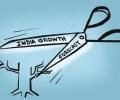
The International Monetary Fund (IMF), in its latest World Economic Outlook report, has slashed its forecast for India's FY23 gross domestic product growth to 8.2 per cent from 9 per cent, saying that higher commodity prices will weigh on private consumption and investment. This was one of the steepest cuts for emerging economies compared to the IMF's January WEO forecasts. Saying that global economic prospects have worsened significantly due to commodity price volatility and disruption of supply chains caused by the war in Europe, IMF cut its global growth outlook for calendar year 2022 to 3.6 per cent from 4.4 per cent, and said both Russia and Ukraine could experience large GDP contractions.

Private equity investments in proptech firms rose 35 per cent to $741 million last year as investors sought to tap huge opportunities amid rising use of technology in the realty sector, Housing.com said. Proptech firms that are providing solution in sales and marketing, and construction management got 69 per cent of the total funds. Inflow of funds into proptech firms stood at $551 million in 2020. Between 2009 and 2021, the proptech players in India received a total of $3.2 billion Private Equity(PE) investments.

Since when have elections become rocket science that you need to hire highly-priced specialists?And even if in the age of social media every party needs to present its best face, is Prashant Kishor the only one with such expertise, especially when his record is mixed with more losses than election wins to his credit? asks Virendra Kapoor.

'Then select those that are well-aligned with your risk-return profile and investment time horizon.'

'Investors should keep them on their radar and invest over a longer time frame, and expect some of these companies to bite the dust.'

The Supreme Court (SC) recently declared that a Hindu father or the manager of a Hindu Undivided Family (HUF) has the power to make a gift of ancestral property for a 'pious purpose', but such an alienation can't be permitted 'out of love and affection'. A petitioner had filed a suit against his father and another person called KC Laxmana for partition and separate possession of his one-third share in the property, and for a declaration that the gift or settlement deed executed by his father in favour of the second defendant, KC Laxmana, be declared null and void. Bharat Chugh, former judge and advocate, says, "The plaintiff argued that the property belonged to the joint family (of which Laxmana was not a part), and transfer of property without his consent was not valid." The SC ruled that gifting out of natural love and affection cannot be interpreted as 'pious purpose'.

The government must expedite its plan for asset sale and privatisation, both of which hardly got any mention in the Budget speech, points out A K Bhattacharya.

The ongoing key reforms such as sops for manufacturing, easier labour laws, wooing FDI inflows and privatisation will help improve productivity and support long-term growth at 7.5-8 per cent levels, which if played out well, can help India contribute 15 per cent of global GDP growth by FY2026, says a report. According to a report pencilled by the India economist at UBS Securities, Tanvee Gupta Jain, the country has the lowest manufacturing costs among peers, even though China retains significant ecosystem advantages and despite that India and Vietnam appear most likely to benefit from a shift out of China.

'In 2022, active management, long-short strategies, multi-asset strategies, and asset allocation strategies need to be considered to meet long-term investment goals.'

'Every time a new tech comes in, there are a set of people who will predict that this will be the end of Indian IT and every time the Indian IT industry and overall technology providers have proven to be resilient.'

So, while it is great that India's numbers look relatively good, don't raise a cheer just yet, points out T N Ninan.

With the economy gaining pace and large deals back on the table, chief executive officers (CEOs) of tech companies believe global tech spending will witness growth this year. According to CEO Survey by Nasscom, about 71 per cent chief executives expect global spend to grow over 4 per cent. The figure is significantly higher than the previous two years - 41 per cent and 59 per cent in 2019 and 2020, respectively. The survey also said the recovery in global tech spending will be led by the digital segment.

As enterprises halt ongoing projects or cancel them, all staffers working on such projects are placed on the bench. In some cases, IT firms have to reduce billable staffers in a project as clients ask for scaling down support, leading to rise in reserved employees.

'The IPO market is cooling off and getting a reality check.'

'Just because you don't see them does not mean they don't exist.' 'The greatest risk is overconfidence.

The headline for corporate profit growth has been very encouraging in the July-September quarter (Q2) of 2023-24 (FY24), with the combined net profit of listed companies up by 38 per cent year-on-year. However, the earnings distribution has been very lopsided, with most of the growth coming from public-sector oil-marketing companies (OMCs), banks, non-bank lenders, automobile (auto) companies, and cement producers. By comparison, companies from information technology services, fast-moving consumer goods (FMCG), retail, and consumer durables were disappointed, experiencing a sharp slowdown in net sales growth and a relatively muted increase in reported net profit.

Even as regulatory focus has zeroed in on foreign e-commerce giant Amazon, a domestic retail giant has been created almost below the radar in Reliance Retail (RR), one of the most crucial businesses for the group's future. From doorstep delivery of groceries, apparels to branded jewellery, medicines, toys, furniture to high street retailing, RR's presence in the world's fourth largest consumer market is just one part of the story.

HCL Tech was the top gainer in the Sensex pack, rising over 4 per cent, followed by HDFC Bank, Infosys, NTPC, Nestle India, TCS and HUL. NSE Nifty surged 337.80 points to 14,845.10.

Ajit Balakrishnan on how to arrest a worldwide decline.

The Centre on Tuesday said it will not seek disclosure of flash sales from e-commerce players to regulate the fraudulent sale of goods and services but will take appropriate action as per the law on consumer complaints. Discount sales that benefit maximum to consumers will continue, but not fraudulent flash sales on the e-commerce platforms, the government said, adding that the e-tailers need not be "anxious" about the draft rules. Ban on fraudulent flash sales, mis-selling and appointment of chief compliance officer/grievance redressal officer -- are among key amendments proposed to the Consumer Protection (e-commerce) Rules, 2020, on which the government has sought public comments by July 6.

'As we expect the economy to continue to grow above the trend line, we expect capex decisions to be taken next year when there is more certainty about the cost of funding and the economy.'

'Short term volatility is likely due to various factors, global and domestic; investors may use this as an opportunity to increase the allocation to equities.'

Experts pointed out the move will only help taxpayers temporarily, as the tax liability remained the same and the date for advance tax has not been extended.

'Today, there is no easy money to be made after the run-up in equities.'

A weak dollar sentiment across the board alongside unwinding of long positions by speculative traders ahead of key US macro data release largely supported the rupee

His about-turn in the farm laws proves that he sees everything in just one dimension: Politics. That helps sometimes. But not always, observes T C A Srinivasa-Raghavan.

India's gold demand recovered during the January-March period to witness a growth of 37 per cent at 140 tonne compared to the same quarter of 2020, due to ease of COVID-related restrictions, pent up demand and softening of prices of the yellow metal, according to the World Gold Council (WGC). The overall gold demand stood at 102 tonne during the first quarter of 2020, as per WGC data. Gold demand in value terms increased by 57 per cent during the first quarter of this calendar year to Rs 58,800 crore compared to Rs 37,580 crore in the corresponding period of 2020.

Following an active lifestyle rather than a sedentary one is essential to eliminate risk of diseases.

In the aftermath of the Karvy incident, lending against third-party collateral facility raises questions over regulations concerning banks and brokers which are at loggerheads. While Sebi and NSDL have ordered the transfer of securities, which were kept as collateral, lenders followed the old business model of sanctioning loan against shares and allegedly overlooked certain parameters. Legal experts feel that this could lead to a collapse of the loan-against-shares market as it raises questions over the sanctity of the pledged securities.

Reversing the burden of evidence means that the principle of innocent until proven guilty does not apply. It is exactly the opposite: Guilty as charged, until you can convince the judges of the contrary, points out Shekhar Gupta.

Revenue buoyancy of GST will be key to improve the resource position of both central and state governments.

'We would advise investors to invest in a disciplined way in equities for the long term.'

While Wipro leads the pack on absolute numbers, analysts for Infosys for reporting consistent growth, revising FY22 guidance and beating TCS on revenue growth.

It is nearly after 13 years that a foreign brokerage has resumed holistic coverage on stocks of public sector banks (PSBs). To that extent, Morgan Stanley's report dated March 3, where the analysts have listed their order of preference for PSB stocks, is an indication that the state-owned banks may once again be attracting some interest, thanks to three back-to-back quarters of good results in FY21 so far. "State-owned banks' balance sheets have improved, and bad loans formation should moderate going forward," the analysts note and this is the key reason for them to relook at their stance on PSBs. While State Bank of India (SBI) remains their preferred pick, stocks of Bank of Baroda (BOB) and Punjab National Bank (PNB) have been upgraded from 'underweight' to 'equal-weight'. The brokerage maintains its underweight recommendation on Bank of India and Canara Bank.

Corporate India lags the rest of its Western and Asian peers by a wide margin when it comes to the presence of women on their boards, with just 17.3 per cent of the large companies having them on their key decision making bodies, an international report said on Tuesday. However, this is a near 6 percentage points improvement between 2015 -- when it was only 11.4 per cent -- and 2021, Swiss brokerage Credit Suisse said in the report, which covered over 33,000 executives from more than 3,000 companies across 46 countries, including over 1,440 firms across 12 Asia-Pacific markets. Female representation on boards of large Indian companies has increased by 5.9 percentage points from 11.4 per cent in 2015 to 17.3 per cent in 2021.
 © 2026 Rediff.com - Advertise with us - Disclaimer - Privacy Policy - Sitemap - Feedback - About us - Terms of use - Grievances